

When you’re relying on Pi Tape® for precise measurements, how you care for it matters just as much as how you use it. A few simple habits can help protect the tape’s condition, preserve its accuracy, and keep it reliable year after year.
Pi Tape® precision measuring products are built to hold precision for decades, and many have. Most tapes are not retired because they wear out. They are retired because someone kinked one, stepped on one, or let one corrode. All three can destroy accuracy permanently, though none are obvious on inspection.
When it comes to the longevity of your Pi Tape®, wipe the tape clean and dry after every use. Apply a light rust-preventive oil if the steel calls for it, and store it coiled in its container in a low-moisture environment.
But proper care is only part of the equation. The following maintenance practices can help you protect your measuring tool, maintain its accuracy, and get the longest possible service from it.
Four things will retire a precision measuring tape early: physical deformation, corrosion, edge damage, and over-tensioning.
Kinks, sharp bends, and being stepped on. These are the most common ways a good tape can incur damage.
A kinked tape no longer lies flat against the part. It bridges at the damaged point and traces a longer path around the circumference. A longer path reads as a larger diameter. The damage is permanent and cannot be worked out.
Pitting on the graduated surface obscures the lines you need to read. It also changes the surface that rides against the part.
Field environments cause some of it. Humid storage causes more. Moisture trapped inside a coiled tape causes the rest.
Nicks and burrs along the tape edge change how it seats against the part. Dragging a tape across a machined edge does it. So does a burr on the part itself.
Certain Pi Tape® are calibrated at a specified pull. Exceeding it once is unlikely to matter. Doing it repeatedly can stretch the material past its specification.
Every one of these failures changes the effective length of the tape. Effective length is the entire basis of the measurement.
Clean, dry, protect, coil, and store. Every time, not just at the end of the week.
Step three matters more than some might think. Moisture trapped under a coil sits against the steel with no airflow. That’s where corrosion starts, and it starts on the inner face where nobody checks.
Step five is worth care too. Forcing a tape into a reverse coil is a common cause of the deformation described above. Let the tape take its own set.
For handling technique during the measurement itself, see our guide to precision outside diameter tapes.
Protection requirements differ by material. One finish is damaged by the treatment that protects the others.
This is where most maintenance advice goes wrong, because generic tool care assumes every steel tape wants oil.
This is carbon steel. It will rust if left unprotected.
Wipe it down after use and apply a light rust-preventive oil before storage. A light gun oil works well. Apply it thinly and evenly across the full length, including the back face.
The material offers excellent thermal stability and stretch resistance, which is why it is the standard choice for precision work. It also demands the most attention.
Our Easy to Read tapes are made with the 1095 Spring Steel material. To compare material options for your environment, see our steel or browse tapes by steel type.
This model is corrosion resistant by design, which is why it is recommended for outdoor, marine, pipeline, and chemical environments.
Still, wipe it clean and dry after every use. Corrosion resistant does not mean corrosion proof. Salt, chlorides, and aggressive process chemicals will still attack stainless over time if left sitting on the surface.
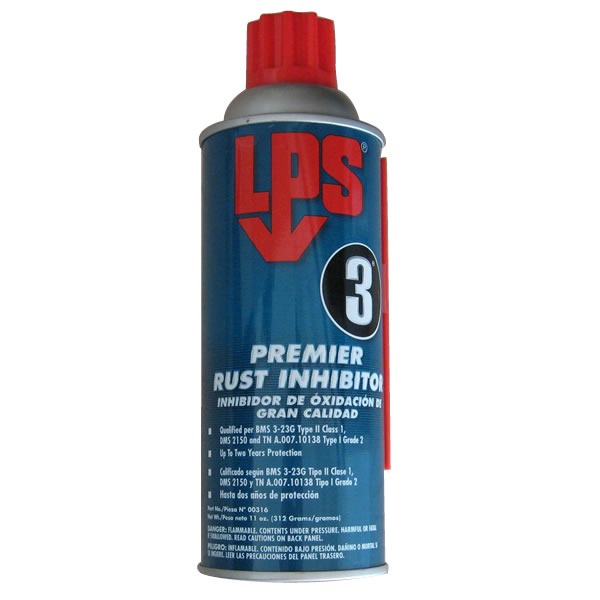
LPS-3 Steel Protectant is built for precision tapes that will sit for a while. It displaces moisture and leaves a soft, transparent waxy film that resists rust. It suits indoor storage of high-accuracy tapes between jobs. Observe the same finish restriction noted above.
Five storage rules worth following:
The practical truth is; most tape damage happens in storage and transport, not during measurement. Technicians tend to be careful while taking a reading. They are less careful about where the tape goes afterward.
A tape that looks fine can still read wrong, because the damage that matters is dimensional rather than visual.
Four examples:
This is why recertification intervals exist. A precision instrument cannot verify itself, and the failures that matter most are the ones you cannot detect by looking.
Check the tape against a known standard, before and after any measurement that matters.
Practical in-house checks:
One distinction matters here. An in-house check tells you something is wrong. It does not produce a traceable statement of conformance. Only accredited calibration does that, and an auditor will know the difference.
Making the Right Call: Recertify, or Replace?
Recertify when the tape is intact and you need documented proof. Replace when the steel is physically compromised.
Recertify if:
Replace if:
Be realistic about the economics. Recertification is worthwhile on an intact tape, and it is the most economical way to keep a quality system compliant. On a physically damaged tape it is money spent to confirm what you already suspect.
Recertification services are performed in our own temperature-controlled laboratory, by the company that manufactured the instrument. Tapes typically carry a 2 to 5 week lead time, so plan around your audit dates.
Most quality systems set intervals between six and twelve months, based on usage and criticality. Heavy shop use, harsh environments, or any suspected impact damage should trigger recertification sooner. Your internal procedure or customer requirement always takes precedence over a general guideline.
A light rust-preventive oil is standard for 1095 spring steel, and a light gun oil works well. Apply thinly across the full length. For longer storage, a moisture-displacing protectant such as LPS-3 is better.
No. A kink permanently changes how the tape lies against the part, which changes the path length it traces. Flattening the kink does not restore the original geometry. A kinked tape should be replaced rather than recertified.
The usual causes are a kink, excessive tension, or misalignment. A kinked tape bridges instead of lying flat, tracing a longer path. A tape wrapped at an angle to the part axis does the same. Check alignment and tension before suspecting the instrument.
Clean it, dry it fully, apply appropriate protection for the steel type, and coil it loosely into its container. Store in a low-moisture, temperature-stable environment. Keep it away from other steel tools and never hang it from a hook.
Yes. 716 stainless resists corrosion but is not immune to it, particularly around salt and process chemicals. Wipe it clean and dry after every use. It still needs correct coiling, protected storage, and periodic recertification.
Is your tape due for its interval, or reading in a way you no longer trust? Our team is ready to help.
Request Recertification | Contact Our Team
For tapes going into longer-term storage, LPS-3 Steel Protectant prevents the corrosion that ends most tapes. If a tape is beyond saving, browse replacement tapes.
Pi Tape Texas, LLC has manufactured precision diameter measuring tapes in the USA since 1944. Our calibration laboratory holds A2LA ISO/IEC 17025:2017 accreditation, with all standards traceable to NIST. Your instrument is recertified by the company that built it.