

Steel grows as it warms. On a 48-inch diameter, a 20°F gap between your tape’s temperature and the temperature it was calibrated at moves the reading by about 0.006″. That’s six times the ±0.001″ accuracy figure Pi Tape® publishes for its tapes, and it comes from the tape alone, before the part moves at all.
Below is the math for sizing that error, followed by what the steel in your tape changes.
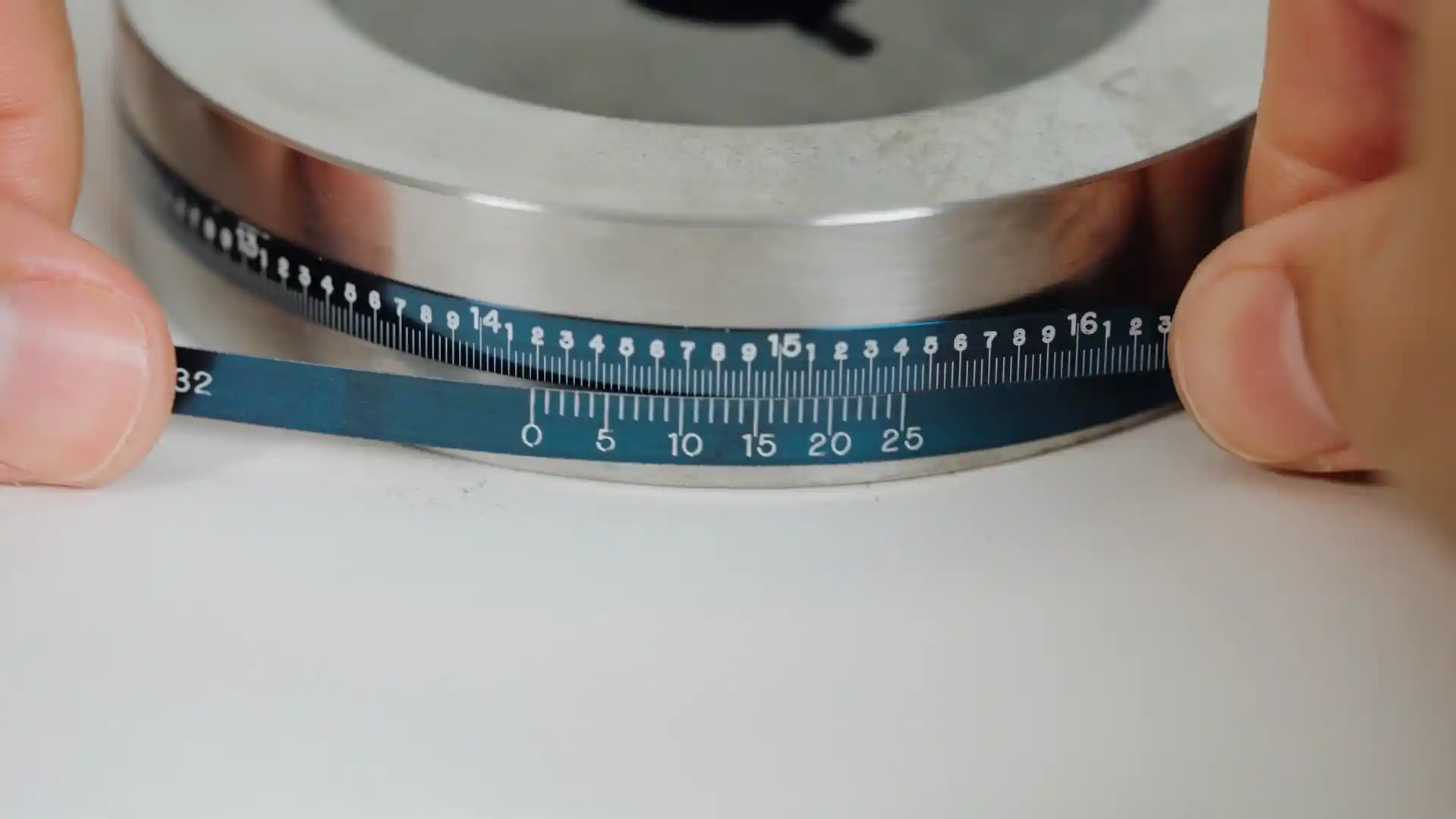
A Pi Tape® measures diameter by wrapping around a round part. The graduations are spaced so the circumference converts directly to diameter through π, so you read diameter straight off the tape with no calculation.
Every material changes length with temperature at a steady rate, known as its coefficient of linear thermal expansion. When a tape is warmer than the temperature it was calibrated at, the steel lengthens and the graduations spread slightly apart. Wrapped around the same part, a warm tape reads small. A cold tape does the opposite and reads large.
The part follows the same physics. A shaft that just came off a lathe, or a pipe that has been sitting in the sun, is physically larger than it will be once it cools. A reading taken at that moment can be correct for that moment and still be wrong against the drawing, which assumes a reference temperature. ISO 1 sets that reference at 20°C (68°F) for dimensional measurement.
The shift in a diameter reading caused by the tape’s own expansion is:
Reading change = α × D × ΔT
Pi Tape® publishes a coefficient of 0.0000065 in/in/°F for its 1095 spring steel and lists 0.0000092 in/in/°F for other tape materials on the market. Here’s what those two figures produce:
| Diameter | Temperature difference | 1095 spring steel | 0.0000092 material | Difference |
|---|---|---|---|---|
| 24″ | 5°F | 0.0008″ | 0.0011″ | 0.0003″ |
| 24″ | 20°F | 0.0031″ | 0.0044″ | 0.0013″ |
| 48″ | 5°F | 0.0016″ | 0.0022″ | 0.0006″ |
| 48″ | 20°F | 0.0062″ | 0.0088″ | 0.0026″ |
The error grows in step with diameter, so it matters most on large work like pipe and turbine casings. At every size, the lower-expansion steel carries about 30% less of it.
The table isolates the tape. In practice the part expands as well, and your reading reflects the difference between the two. When the tape and the part sit at the same temperature and expand at similar rates, much of the shift cancels out. 1095 is a high-carbon steel, so its rate sits close to that of many carbon and alloy steel parts.
The cancellation breaks down when materials or temperatures differ. Aluminum alloys expand roughly twice as fast as carbon steel, so a warm aluminum housing reads larger than its size at 68°F no matter which tape you use. A cold tape on a hot part is the worst case, because both errors push the reading in the same direction.
Pi Tape® makes its tapes in three steel options. These physical properties come from the published Pi Tape® steel specifications.
| Property | 1095 Spring Steel | 716 Stainless Steel |
|---|---|---|
| Coefficient of expansion (in/in/°F) | 0.0000065 | 0.0000062 |
| Hardness | 51 RC | 49 to 53 RC |
| Tensile strength (PSI) | 259,600 | 248,000 to 277,000 |
| Yield strength (PSI) | 235,690 | 210,000 |
| Elongation | 7 to 10% | 7 to 12% |
Both base steels sit well below the 0.0000092 figure, so for most buyers the choice comes down to where the tape will be used. See the full steel comparison or shop tapes by steel.
If you’re measuring large diameters or working outdoors, our team can recommend the right tape and steel for your application. Call (903) 266-9204 or contact the Pi Tape® team. International customers can email [email protected], and domestic customers can email [email protected].